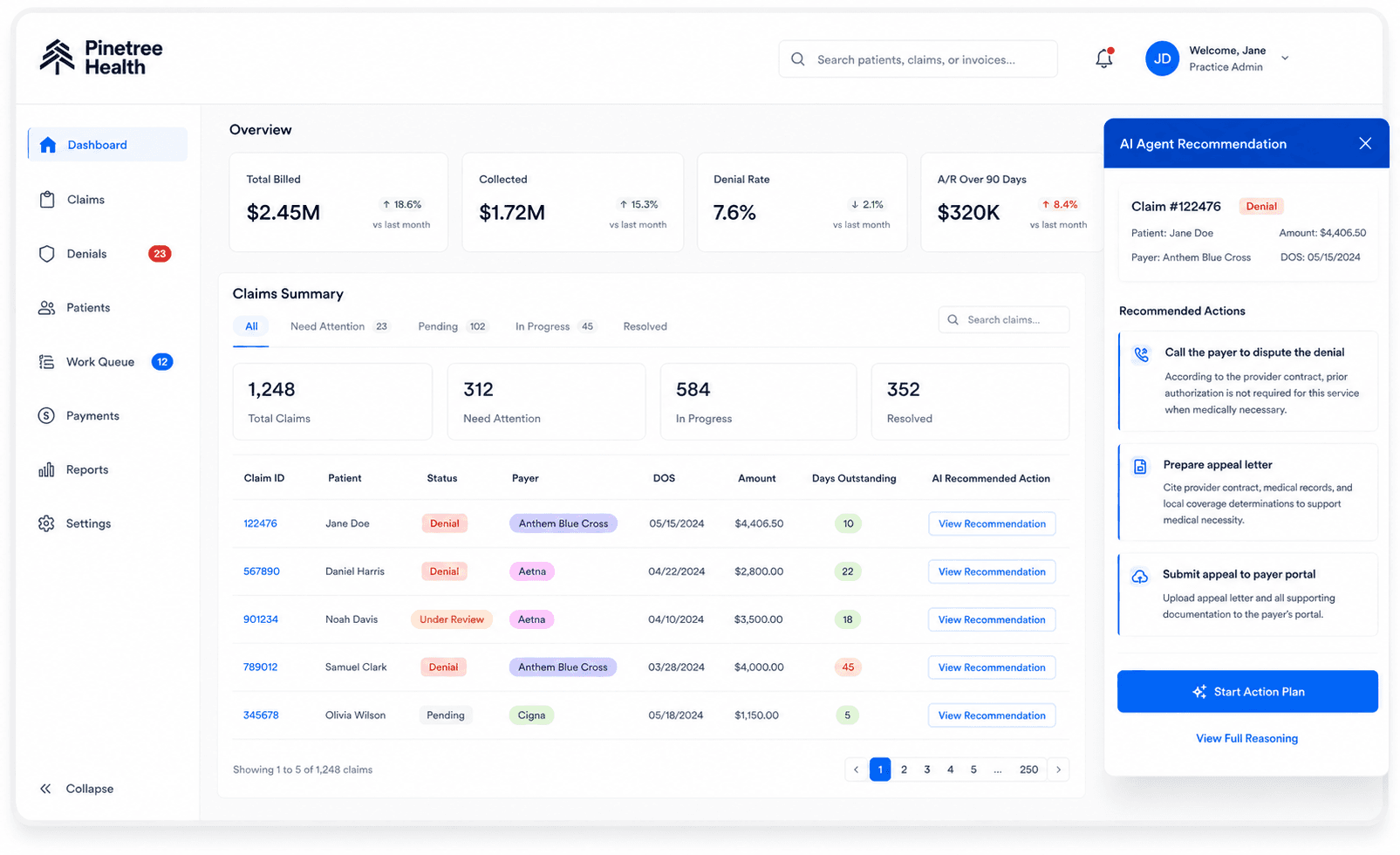
Is AI Worth It for a Small Medical Practice? A Guide to Real-World RCM

Is AI Worth It for a Small Medical Practice? A Guide to Real-World RCM
You hear about Artificial Intelligence (AI) in healthcare everywhere. The news talks about robotic surgery, groundbreaking diagnostics, and massive hospital systems implementing futuristic tech. But for you, the owner of a small specialty practice, the conversation feels a world away. You aren't trying to map the human genome; you're just trying to get prior authorizations approved and figure out why a simple claim was denied. The real question is: can this complex technology actually help your small practice's bottom line without creating more headaches?
The answer is yes, but not in the way the headlines suggest. For a small practice, the most powerful use of AI isn't about replacing clinical judgment. It's about fixing the broken, time consuming processes that hurt your revenue and lead to burnout. It’s about getting paid fully and fairly for the expert care you provide.
What administrative work can AI really take off my plate?
The single biggest drain on any practice is the "significant administrative burden" that keeps you and your staff buried in paperwork (Source). This is the work that creates "pajama time," forcing you to finish charting and admin tasks long after your last patient has gone home.
It’s no surprise that physicians are looking to AI for relief. In a recent American Medical Association survey, 54% of physicians said they believe AI can help reduce stress and burnout. They see its potential to help with tasks like drafting responses to the flood of patient portal messages.
At its core, AI uses complex algorithms to emulate human thinking in the analysis of complicated data. When applied to your practice's operations, this means it can automate the repetitive administrative tasks that currently require manual effort. Think about things like:
Verifying insurance eligibility: Instead of a staff member spending time on the phone or navigating a payer portal, an AI-powered system can do it automatically before the appointment.
Submitting claims: AI can review claims for common errors before they are ever sent to the payer, reducing the chance of an initial denial.
Managing billing and collections: The system can automatically track claim status, flag unpaid claims for follow up, and even manage patient statements.
By automating these tasks, AI directly reduces the workload on your team, freeing you up to focus on patient care.
But will this actually improve my practice's finances?
Reducing burnout is a worthy goal, but your practice needs to be financially healthy to survive. This is where most high level discussions about AI miss the point for small business owners. They talk about reducing costs in the abstract but fail to connect the dots to your Revenue Cycle Management (RCM).
Your RCM is the entire financial lifeblood of your practice, from the moment a patient schedules an appointment to the moment you receive final payment for your services. Every manual error, delayed submission, or missed follow up in this cycle costs you money.
This is where AI provides a clear return on investment.
When AI automates your RCM, it isn't just saving you time; it's making your revenue cycle more efficient and accurate.
Fewer Denials: AI can scrub claims for coding errors or missing information that would trigger an automatic denial from an insurance company. Catching these mistakes before submission means you get paid correctly the first time.
Faster Payments: Automation speeds up the entire process. Claims are submitted faster, denials are identified and appealed more quickly, and your average days in Accounts Receivable (A/R) goes down. This improves your cash flow, giving your practice more financial stability.
Increased Net Collections: By ensuring claims are clean and by tirelessly following up on underpayments and denials, an AI powered system helps you collect more of the money you've rightfully earned.
While large health systems like Geisinger have implemented over 110 different automations, a small practice doesn't need that level of complexity. You just need to solve your core RCM challenges, and that’s where today’s AI tools truly shine.
How do I choose an AI tool that actually works for a small practice?
This is the most important question. The technology used by a giant hospital is not built for your reality. You don't have a dedicated IT department or a massive budget. You need a solution that is affordable, easy to implement, and integrates with the Electronic Health Record (EHR) you already use.
When you evaluate any AI-powered RCM service, forget the hype and ask these practical questions:
Is this built for a practice my size? Be wary of solutions designed for enterprise clients. You need a tool that understands the resource constraints and specific billing challenges of a solo or small group practice.
How does it handle my specialty? The coding and billing rules for cardiology are very different from those for mental health. Ensure the vendor has expertise in your specific field.
What is the real cost and how do you measure success? Look for transparent pricing. A good partner should be able to clearly explain how they will measure their impact on your net collection rate, days in A/R, and denial rate.
How do you handle security and compliance? The AMA has rightly identified data privacy as a key principle for AI in healthcare. Your vendor must be able to explain exactly how they protect patient data and ensure full HIPAA compliance.
Is this technology too complex or risky to manage?
It's reasonable to have concerns. After all, the healthcare system is already "complex and challenging for all stakeholders." You are a physician, not a data scientist. You shouldn't have to worry about liability, transparency, or AI governance.
The good news is, you don’t have to. The right AI RCM partner acts as a layer between you and the complexity. They are responsible for vetting the technology, ensuring its accuracy, and keeping it secure. Their job is to deliver the result; a healthier bottom line and less administrative work; without requiring you to become an AI expert.
For small practices, the path to leveraging AI is not about buying abstract software. It's about finding a partner who has already harnessed this technology to solve the specific, frustrating, and costly problems of medical billing. Companies like Pinetree Health focus exclusively on using AI to streamline the revenue cycle for small and independent practices, turning a complex technology into a simple tool for financial health.
Ultimately, the goal is simple: to use technology to clear away the administrative fog so you can focus on what you do best; caring for your patients.
Connect with our team to learn how Pinetree Health can help.